
LinkedIn comment velocity has become one of the most important yet misunderstood factors in organic reach. In 2026, the first 60 minutes after publishing a post often determine whether your content reaches 500 people or 50,000.
Most professionals focus on writing better hooks. Some experiment with formatting tricks. Others blame the algorithm when impressions stay low.
What they overlook is comment velocity.
Comment velocity refers to the speed and concentration of meaningful comments your post receives shortly after publication. It is not just about the total number of comments. It is about how quickly those comments arrive and how deeply they extend the conversation.
Understanding LinkedIn comment velocity changes how you approach content forever.
Why LinkedIn Comment Velocity Matters More Than Likes
Many users assume likes drive reach. They do not.
Comments create conversation threads. Conversation threads increase dwell time. Dwell time signals value to the LinkedIn algorithm.
According to LinkedIn’s official marketing resources at https://business.linkedin.com/marketing-solutions/blog, meaningful engagement drives distribution far more effectively than passive reactions.
When your post receives multiple thoughtful comments within the first hour, LinkedIn interprets that as relevance.
Relevance increases distribution.
Distribution increases impressions.
Impressions increase opportunity.
LinkedIn comment velocity is the ignition point of that chain reaction.
The First 60 Minutes Effect
The first hour after publishing is a testing phase.
LinkedIn initially distributes your content to a small percentage of your network. The platform observes engagement behavior:
Are people stopping to read
Are they responding
Are they commenting in depth
Are others replying to those comments
If early engagement is weak, distribution slows.
If early engagement is strong and conversational, distribution expands into second and third degree networks.
This is why two posts of similar quality can produce dramatically different outcomes.
One receives scattered engagement over several hours.
The other experiences concentrated comment velocity in the first 30 to 60 minutes.
The second post almost always wins.
LinkedIn Comment Velocity and Algorithmic Amplification
LinkedIn does not publicly reveal full algorithm mechanics. However, multiple platform studies and industry analyses consistently show that comment based engagement drives higher organic expansion.
Social Media Examiner’s annual industry research highlights that meaningful conversation consistently outperforms passive engagement in social distribution.
LinkedIn comment velocity fuels three algorithmic triggers:
Conversation depth
Engagement clustering
Network expansion
Conversation depth occurs when comments lead to replies and sub threads.
Engagement clustering occurs when multiple users interact within a compressed time frame.
Network expansion happens when commenters expose your content to their audiences.
Comment velocity strengthens all three simultaneously.
Why Great Content Fails Without Comment Velocity
You can write a powerful post with insight, clarity, and strong positioning.
If it receives limited early engagement, it may stall.
This creates frustration.
Professionals assume content quality is the problem. Often it is not.
The issue is distribution infrastructure.
Most LinkedIn users rely entirely on organic luck. They publish and hope.
That is not a strategy.
A sustainable LinkedIn engagement strategy requires intentional systems that support comment velocity during the critical first hour.
The Psychology Behind Early Commenting
Early engagement activates psychological momentum.
When new viewers see active discussion, they are more likely to join.
Silence discourages participation.
Visible conversation signals social proof.
Social proof reduces hesitation.
Hesitation reduces comments.
This feedback loop explains why posts with early LinkedIn comment velocity tend to snowball.
It is not just algorithmic.
It is behavioral.
Comment Velocity Versus Comment Volume
Volume is cumulative.
Velocity is concentrated.
A post receiving 40 comments over 24 hours is different from a post receiving 15 meaningful comments in the first 45 minutes.
Velocity influences algorithmic amplification.
Volume influences long term authority.
Both matter, but velocity determines early reach.
If your goal is increasing LinkedIn algorithm reach organically, you cannot ignore velocity.
Building a LinkedIn Comment Velocity System
Random engagement will not produce consistent velocity.
You need a structured engagement system.
Step 1: Publish at Strategic Times
Post when your audience is active.
Review historical engagement patterns. Identify when your network responds fastest.
Velocity depends on timing.
Step 2: Prime Key Connections
Engage with your target audience before publishing.
When you comment on their posts earlier in the day, they are more likely to see and engage with yours.
Reciprocity influences comment velocity.
Step 3: Encourage Depth, Not Just Reactions
End posts with prompts that invite discussion.
Instead of asking for agreement, ask for perspective.
For example:
What has your experience been with this shift
What is one tactic that has worked for you
Where do you disagree
Discussion driven prompts increase comment velocity quality.
Step 4: Reply Rapidly
When someone comments, respond quickly.
This doubles the visible activity and increases thread depth.
Active replies signal ongoing conversation to the algorithm.
Step 5: Use Structured Engagement Networks
Professionals who take LinkedIn growth seriously build collaborative engagement systems.
Instead of hoping their post gains traction, they participate in organized networks where high quality professionals support each other’s content with thoughtful comments.
This approach increases LinkedIn comment velocity predictably.
If you are exploring how structured engagement integrates with automation, review LinkedIn Automation Tools for Beginners to understand foundational layers.
Why Structured Engagement Is Not Spam
There is a misconception that coordinated engagement equals manipulation.
Low quality comment pods damage credibility.
High quality collaborative networks operate differently.
They focus on:
Relevant niches
Thoughtful commentary
Genuine insight
Professional alignment
When executed properly, structured engagement increases exposure without sacrificing authenticity.
The key distinction is intent.
Are participants adding value or leaving generic praise.
Meaningful comments fuel sustainable LinkedIn comment velocity.
Measuring Comment Velocity
To optimize LinkedIn comment velocity, track:
Number of comments within first 60 minutes
Average response time to first comment
Thread depth per comment
Profile views following high velocity posts
Inbound messages generated
Velocity becomes a measurable growth lever.
When paired with pipeline tracking frameworks like those outlined by HubSpot at comment velocity becomes directly connected to revenue.
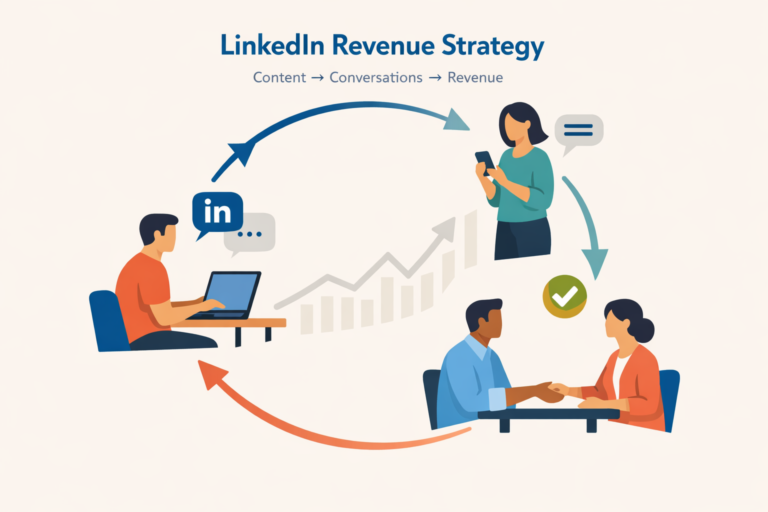
From Velocity to Revenue
Why does LinkedIn comment velocity matter beyond reach.
Because reach expands authority.
Authority attracts inbound.
Inbound generates pipeline.
When comment velocity consistently amplifies your best insights, your brand presence compounds.
Over time, decision makers begin associating your name with expertise.
That familiarity shortens sales cycles.
Long Term Effects of Consistent Comment Velocity
Professionals who maintain strong LinkedIn comment velocity across months experience:
Increased second degree exposure
Higher follower growth
More profile discovery
Greater inbound message volume
Velocity creates momentum.
Momentum builds authority.
Authority builds opportunity.
Common Mistakes That Reduce Comment Velocity
Posting and disappearing
Publishing during low activity hours
Ignoring early comments
Relying solely on passive audience growth
Over focusing on likes instead of discussion
Each of these weakens the first hour effect.
If you want distribution, you must protect the first 60 minutes.
The 2026 Opportunity Window
LinkedIn organic reach remains stronger than most professional platforms.
As more users compete for attention, structured LinkedIn comment velocity will separate serious marketers from casual users.
Those who understand early engagement dynamics will dominate visibility.
Those who rely on randomness will struggle.
Final Thoughts
LinkedIn comment velocity is not a growth hack.
It is a distribution principle.
In 2026, content quality alone is insufficient.
The first 60 minutes determine trajectory.
If you want predictable LinkedIn algorithm reach, you must build systems that support concentrated, meaningful engagement immediately after publishing.
Protect the first hour.
Encourage discussion.
Respond quickly.
Participate in structured engagement networks.
When comment velocity becomes intentional, LinkedIn stops feeling unpredictable.
It becomes infrastructure.